Naples, the vibrant heart of Southern Italy, is a city that has long inspired poets, writers, and intellectuals. From its ancient origins to its bustling modern life, Naples is a place where history, culture, and literature intertwine, offering a unique experience for those who seek more than just a typical tourist adventure. For the literati, Naples is a treasure trove of narratives waiting to be discovered. This blog post will guide you through the literary landmarks, the historic cafés, the iconic libraries, and the stories that have shaped the city’s rich literary heritage.
The Literary History of Naples
Ancient Origins
Naples, or Neapolis as it was known in ancient times, has a literary tradition that dates back to its very foundation. The city’s name means “new city,” a term given by Greek settlers who arrived in the 8th century BC. This historical backdrop set the stage for a city that would become a melting pot of cultures and ideas, influencing writers and thinkers for centuries.
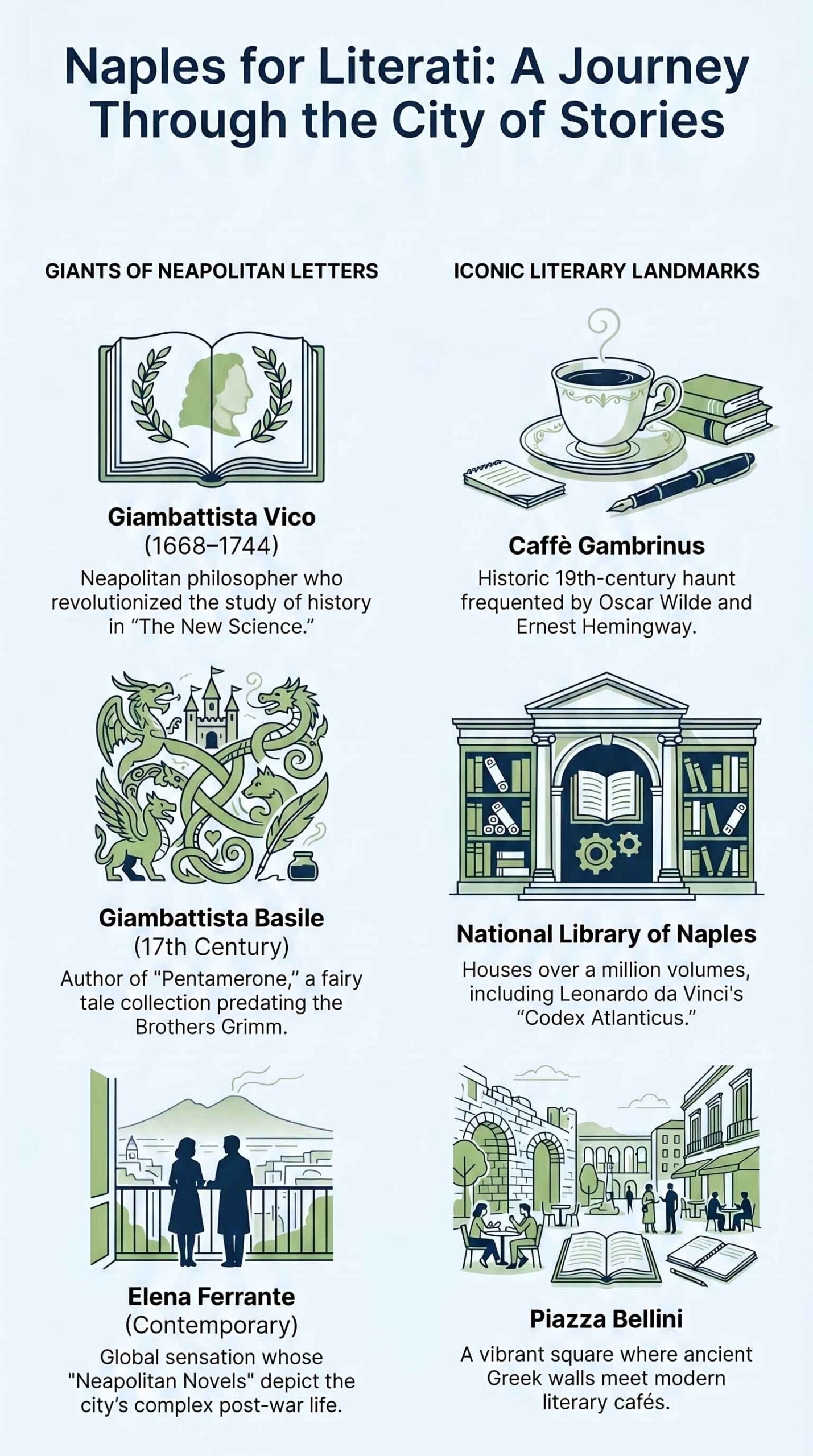
The philosopher Giambattista Vico, born in Naples in 1668, is one of the city’s most notable intellectuals. His work “The New Science” is considered a cornerstone in the philosophy of history. Vico’s ideas about the cyclical nature of history and the development of human societies were revolutionary and continue to be studied today.
The Renaissance and Baroque Periods
The Renaissance brought a cultural revival to Naples, with literature playing a crucial role. The city became a hub for poets, playwrights, and scholars. Jacopo Sannazaro, a poet from the 15th century, is best known for his pastoral masterpiece “Arcadia,” which had a profound influence on European literature.
In the Baroque period, Naples was a bustling metropolis and one of the largest cities in Europe. This era saw the rise of Giambattista Basile, whose collection of fairy tales, “Pentamerone,” predates the works of the Brothers Grimm and Charles Perrault. These stories, deeply rooted in Neapolitan folklore, reflect the city’s rich oral tradition and vivid imagination.
The 19th and 20th Centuries
The 19th century was a time of great change for Naples, with the city experiencing political upheavals and social transformations. During this period, Naples produced some of Italy’s most significant literary figures. Francesco De Sanctis, a literary critic and historian, wrote extensively about Italian literature and culture. His “History of Italian Literature” remains a seminal work in the field.
In the 20th century, Naples continued to inspire writers from around the world. Curzio Malaparte, an Italian journalist, novelist, and diplomat, captured the complexities of the city in his works. His semi-autobiographical novel “The Skin” offers a harrowing depiction of Naples during World War II.
Elena Ferrante, a contemporary author whose identity remains a mystery, has brought international attention to Naples with her “Neapolitan Novels.” This series, starting with “My Brilliant Friend,” explores the lives of two women growing up in a poor neighborhood in post-war Naples. Ferrante’s vivid storytelling and deep psychological insight have captivated readers worldwide, making Naples a central character in her work.
Literary Landmarks in Naples
Piazza Bellini
Piazza Bellini is a vibrant square in the historic center of Naples, known for its lively atmosphere and intellectual vibe. The square is named after the composer Vincenzo Bellini, but it is also a gathering place for writers, artists, and students. The ancient Greek walls that once surrounded Neapolis are visible here, creating a juxtaposition of the old and new.
Cafés around Piazza Bellini, such as Caffè Letterario Intra Moenia, are popular spots for literary discussions and events. This café often hosts book presentations, poetry readings, and cultural debates, making it a perfect place for literati to immerse themselves in the city’s intellectual life.
The National Library of Naples
The National Library of Naples, housed in the Royal Palace, is one of Italy’s most important libraries. With over a million volumes, it holds an extensive collection of manuscripts, incunabula, and rare books. Among its treasures is the “Codex Atlanticus” by Leonardo da Vinci, a twelve-volume set of drawings and writings by the Renaissance genius.
The library’s reading rooms offer a serene environment for study and reflection. For those interested in the history of Naples and its literary contributions, the library’s archives provide invaluable resources.
The Vico Monument
Giambattista Vico’s legacy is commemorated with a monument in his honor, located near the Church of San Biagio dei Librai. Vico’s influence on philosophy and literature makes this monument a significant site for those exploring the city’s intellectual heritage. A visit to this monument offers a moment of reflection on the profound impact of Vico’s work on Western thought.
Via San Gregorio Armeno
Via San Gregorio Armeno is famous for its nativity scene artisans, but it also has literary significance. This narrow street in the heart of Naples is lined with shops selling handcrafted presepi (nativity scenes), a tradition that dates back to the 18th century.
For literature enthusiasts, this street is a reminder of the deep connection between Neapolitan culture and storytelling. The intricate scenes depicted in the presepi often include characters from local folklore and literature, blending religious themes with everyday life in Naples.
Literary Cafés and Bookshops
Caffè Gambrinus
Caffè Gambrinus, located near the Piazza del Plebiscito, is a historic café that has been a favorite haunt of writers, artists, and intellectuals since the 19th century. Writers such as Oscar Wilde, Ernest Hemingway, and Matilde Serao have all enjoyed the elegant ambiance of this café.
The opulent interiors, adorned with frescoes and chandeliers, provide a luxurious setting for literary discussions. Sipping an espresso or indulging in a traditional Neapolitan pastry at Caffè Gambrinus is a must for any literary pilgrim in Naples.
Libreria Berisio
Libreria Berisio, a charming bookshop in the heart of Naples, is a haven for book lovers. With its wooden shelves filled with both new and second-hand books, this cozy store offers a wide selection of literature, including works by local authors.
The bookshop also hosts literary events, book presentations, and readings, creating a vibrant community of readers and writers. The warm and inviting atmosphere of Libreria Berisio makes it an ideal place to spend an afternoon browsing for literary treasures.
Scugnizzo Liberato
Scugnizzo Liberato, located in an old prison, is a cultural center that promotes social and cultural activities, including literary events. The name “Scugnizzo” refers to the street children of Naples, symbolizing the center’s mission to provide a space for creativity and expression.
The center hosts writing workshops, poetry readings, and book fairs, making it a dynamic venue for the literary community. Visiting Scugnizzo Liberato offers a unique glimpse into the grassroots literary culture of Naples.
Literary Walks and Tours
Elena Ferrante’s Naples
For fans of Elena Ferrante’s “Neapolitan Novels,” exploring the locations described in her books offers a deeper connection to her stories. A literary tour of Ferrante’s Naples includes visits to the neighborhood of Rione Luzzatti, where the protagonists Lila and Lenù grew up, and the Piazza dei Martiri, a central location in the novels.
Walking through these streets and neighborhoods allows readers to experience the vibrant and sometimes tumultuous life of Ferrante’s characters. The tour provides insights into the social and cultural context of post-war Naples, enhancing the reading experience.
Literary Naples Walking Tour
A general literary walking tour of Naples can encompass various landmarks associated with the city’s rich literary heritage. Starting from Piazza Bellini, the tour can include visits to the National Library, the Vico Monument, and historic bookshops like Libreria Berisio.
The tour can also highlight sites related to notable literary figures, such as the homes of Giambattista Vico and Curzio Malaparte. Walking through the streets of Naples, with its vibrant street life and historic architecture, offers a sensory experience that brings the city’s literary history to life.
Naples for Literati © in Love with the Med
Naples in Literature
“My Brilliant Friend” by Elena Ferrante
Elena Ferrante’s “My Brilliant Friend” is perhaps the most famous contemporary novel set in Naples. The book, the first in the “Neapolitan Novels” series, captures the complexities of female friendship against the backdrop of a rapidly changing city.
Ferrante’s vivid descriptions of Naples, from the gritty streets of the Rione Luzzatti to the elegant boulevards of the city center, paint a rich and multifaceted portrait of the city. Her exploration of social and economic issues, alongside personal narratives, provides a deep and engaging read for those interested in Naples.
“The Skin” by Curzio Malaparte
Curzio Malaparte’s “The Skin” offers a stark and unflinching depiction of Naples during World War II. The novel, based on Malaparte’s own experiences as a war correspondent, portrays the city’s struggles and resilience in the face of occupation and devastation.
Malaparte’s writing is both brutal and poetic, capturing the harsh realities of war while also reflecting on the enduring spirit of Naples and its people. “The Skin” is a powerful work that provides historical context and emotional depth to the city’s literary landscape.
“Pentamerone” by Giambattista Basile
Giambattista Basile’s “Pentamerone” is a collection of fairy tales that delves into the rich folklore of Naples. Written in the 17th century, these stories are filled with magic, humor, and wisdom, reflecting the vibrant oral traditions of the region.
The tales in “Pentamerone” are characterized by their imaginative plots and colorful characters, offering a glimpse into the storytelling traditions that have shaped Neapolitan culture. Reading Basile’s work provides an appreciation for the deep roots of literary creativity in Naples.
In Summation
Naples is a city that speaks to the soul of any literati. Its streets, squares, and landmarks are imbued with stories that span centuries. From ancient philosophers to contemporary novelists, Naples has inspired a diverse array of writers who have captured the essence of this vibrant city in their works.
Exploring Naples through its literary heritage offers a unique and enriching experience. Whether visiting historic cafés, browsing bookshops, or walking in the footsteps of famous authors, the city invites you to immerse yourself in its rich tapestry of narratives. Naples for literati is not just a journey through a city; it’s a journey through time, culture, and the enduring power of stories.