Unveiling the Sulmona-Carpinone Line: A Journey Through Time and Mountains
We’ve all heard of the famous Trans-Siberian Railway, but did you know that Italy has its own version tucked away in the Abruzzo region? Let’s embark on a fascinating journey through the heart of Italy’s rugged mountains and discover why this hidden gem is captivating travelers from around the world.
A Railway Reborn: The Revival of a Historic Line
From Engineering Marvel to Forgotten Relic
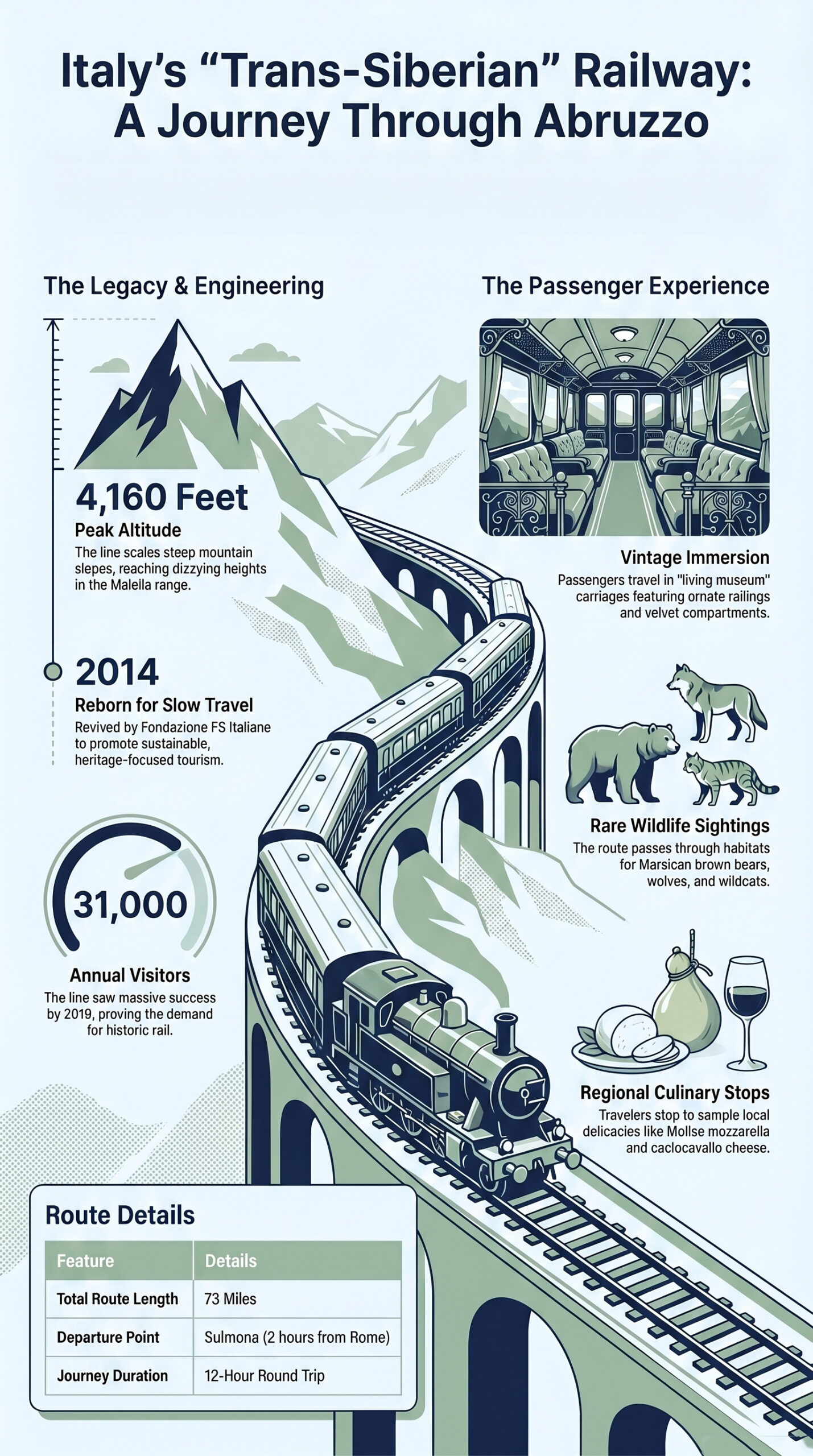
When the Sulmona-Carpinone railway line first chugged to life in 1897, it was hailed as a triumph of engineering. Imagine a train scaling the steep slopes of the Abruzzo region, climbing to dizzying heights of 4,160 feet in the Maiella mountains. This 73-mile route wasn’t just a means of transportation; it was a lifeline connecting remote mountain communities.
But as with many great stories, this one took a turn. The rise of the automobile and the allure of city life led to the line’s closure in 2010. It was as if a chapter of Italian history had been abruptly shut, leaving mountain towns isolated and yearning for the rhythmic clatter of trains on tracks.
A Phoenix Rising from the Ashes
Just when it seemed the Sulmona-Carpinone line was destined to become a footnote in history books, something remarkable happened. In 2014, the Fondazione FS Italiane, a state agency with a passion for preserving Italy’s railway heritage, breathed new life into the old tracks.
This wasn’t just about restoring a train line; it was about rekindling a connection to the past and opening up a world of slow, sustainable tourism. And boy, did it work! By 2019, the line was welcoming a whopping 31,000 visitors annually. Even the COVID-19 pandemic couldn’t derail this success story for long.
The Trans-Siberian Railway of Abruzzo © in Love with the Med
All Aboard: A Journey Like No Other
Setting Off from Sulmona
Picture this: It’s 8:30 AM in Sulmona, a charming town just a two-hour drive east of Rome. The air is filled with excitement as enthusiastic volunteers greet travelers at the station. The train whistle blows, and you’re transported back in time.
As you step aboard, you’re immediately struck by the rich history visible in every detail. The ornate railings, the glass lamps, and even the vintage emergency stop pulls all tell a story. It’s like stepping into a living museum, with wooden seats reminiscent of church pews and compartments lined in plush velvet.
A Feast for the Senses
As the train begins its 12-hour round trip journey, you’re in for a treat. The landscape outside your window transforms like a living painting. One moment you’re gliding past peaceful pastures dotted with grazing sheep, and the next you’re surrounded by soaring mountains, their slopes adorned with ancient Roman aqueducts.
But it’s not just about the views. This journey engages all your senses. The rhythmic clatter of wheels on tracks, the smell of the countryside, and the taste of local delicacies at each stop combine to create an unforgettable experience.
Wildlife and Wonder: Nature’s Grand Display
A Wild Ride Through Untamed Lands
Hold onto your seats, folks, because this isn’t your average train ride. As you wind through the mountains, don’t be surprised if the train makes an unexpected stop. No, it’s not a mechanical issue – it’s probably just a family of wild animals crossing the tracks!
This region is a haven for rare and wonderful creatures. The elusive Marsican brown bear calls these mountains home, along with wolves, wildcats, and a variety of bird species. It’s like traveling through a living, breathing nature documentary.
Seasons of Change
One of the most magical aspects of this journey is how it transforms with the seasons. In autumn, the mountainsides explode in a riot of reds and golds. Winter blankets the peaks in pristine snow, while summer paints the fields in vibrant emerald hues. No matter when you choose to ride, you’re guaranteed a spectacular show.
More Than Just a Train Ride: A Cultural Immersion
Stepping Back in Time
Each stop along the Sulmona-Carpinone line is like stepping into a time capsule. These mountain towns offer a glimpse of old Italy, far removed from the bustling tourist hotspots. Ancient stone buildings line the streets, outdoor markets burst with seasonal produce, and the air is filled with the melodies of local musicians.
A Warm Welcome
What really sets this journey apart is the warmth of the local people. As the train pulls into each station, you’re greeted by waving townspeople and impromptu performances. Couples dance in the streets, and local bands strike up fanfares. It’s a far cry from the anonymous rush of modern travel – here, you’re not just a passenger, you’re an honored guest.
Culinary Delights: A Taste of Abruzzo
Gastronomic Adventures at Every Stop
One of the best parts of this journey? The food! With hour-long stops at most stations, you have plenty of time to explore local eateries and sample regional specialties. Sink your teeth into cured meats, savor the tang of Molise mozzarella, or indulge in the rich flavors of caciocavallo cheese.
For the more adventurous, guided bike rides and tours offer a chance to work up an appetite before diving into the local cuisine. It’s a foodie’s dream come true!
The People’s Train: A Journey for All
A Melting Pot on Rails
What makes this train truly special is the diverse mix of passengers it attracts. You’ll find yourself rubbing shoulders with locals who remember commuting on this very line in their youth, groups of friends celebrating annual vacations, and curious travelers from around the world.
It’s not uncommon to see entire families aboard, with children wide-eyed at the passing scenery and even pets getting in on the action. (We once saw a man holding his dog up to the window so it could enjoy the view!)
The Trans-Siberian Connection: A Nickname That Stuck
From Italy to Siberia (Sort Of)
You might be wondering, “Why on earth is this called the Trans-Siberian Railway of Italy?” Well, it all started with a journalist named Luciano Zeppegno. In 1980, he was so blown away by the mountain scenery along the route that he dubbed it “the little Trans-Siberian” in an article.
Now, we know it’s nowhere near Siberia, but the name stuck. It became a clever marketing tool, drawing in tourists eager to experience a slice of Siberian adventure in the heart of Italy.
The Future of Slow Travel: Sustainability and Connection
A Model for Sustainable Tourism
In an age of high-speed trains and budget airlines, the Sulmona-Carpinone line offers something different: a chance to slow down and truly connect with the landscape and culture you’re traveling through. It’s a model of sustainable tourism, allowing visitors to experience the beauty of rural Italy without overwhelming these small communities.
Preserving a Legacy
The revival of this historic line isn’t just about tourism – it’s about preserving a vital piece of Italian heritage. These tracks once played a crucial role in the country’s development, from transporting supplies during World War II to connecting isolated communities during peacetime.
By keeping these trains running, we’re not just maintaining a mode of transport; we’re keeping alive a connection to Italy’s past and ensuring that future generations can experience this unique journey.
Practical Tips for Your Trans-Italian Adventure
1. Book in advance: The train runs only on weekends and has limited capacity.
2. Pack snacks: There’s no food service on board, so bring provisions.
3. Dress in layers: Mountain weather can be unpredictable.
4. Bring a camera: You’ll want to capture every moment of this scenic journey.
5. Learn a few Italian phrases: It’ll help you connect with locals along the way.
The Journey’s End: A Return to Reality
As the train makes its final approach back to Sulmona, you might find yourself feeling a bit wistful. The warm glow of the vintage lamps, the gentle rocking of the carriage, and the twinkling lights of mountain towns passing by – it all feels like waking from a beautiful dream.
But here’s the thing: this dream is real, and it’s waiting for you to experience it. The Sulmona-Carpinone line isn’t just a train ride; it’s a journey through time, culture, and some of Italy’s most stunning landscapes.
Abruzzo’s Trans-Siberian Railway FAQ
What is the Trans-Siberian Railway of Abruzzo?
The Trans-Siberian Railway of Abruzzo is the nickname given to the Sulmona-Carpinone railway line in Italy.
This historic 73-mile route, originally built in 1897, travels through the rugged Maiella mountains in the Abruzzo region, reaching elevations of up to 4,160 feet. It was historically a crucial connection for remote mountain communities.
After being closed in 2010, it was revived in 2014 by the Fondazione FS Italiane, a state agency dedicated to preserving Italy’s railway heritage, as a way to promote slow and sustainable tourism.
Why is this Italian railway called the "Trans-Siberian Railway"?
The nickname "little Trans-Siberian" was given to the Sulmona-Carpinone line by journalist Luciano Zeppegno in 1980, who was struck by the mountainous scenery along the route, reminiscent of the famous Siberian railway.
While geographically unrelated, the name stuck and has become a successful marketing tool, attracting tourists seeking a unique journey through Italy's landscapes.
What can travelers expect to see and experience on the journey?
The journey offers a feast for the senses. Travelers will experience a 12-hour round trip, departing from Sulmona. The route passes through varied landscapes, from peaceful pastures to soaring mountains adorned with ancient Roman aqueducts.
The historic train carriages feature vintage details like ornate railings and velvet-lined compartments, offering a step back in time.
Stops in charming mountain towns provide opportunities to explore local culture, enjoy impromptu performances, and sample regional culinary delights such as cured meats, Molise mozzarella, and caciocavallo cheese.
What is the significance of the railway's revival?
The revival of the Sulmona-Carpinone line is more than just restoring a train route; it's about rekindling a connection to Italy's past and promoting slow, sustainable tourism. It has breathed new life into isolated mountain towns that were disconnected after the line's initial closure.
The project serves as a model for sustainable tourism, allowing visitors to experience rural Italy's beauty and culture without overwhelming small communities. It also preserves a vital piece of Italian heritage that played a crucial role in the country's development.
What kind of wildlife might travelers encounter along the route?
The Abruzzo region through which the train travels is a haven for wildlife. Travelers might experience unexpected stops due to animals crossing the tracks.
The area is home to rare species like the elusive Marsican brown bear, as well as wolves, wildcats, and various bird species, offering a glimpse into a living nature documentary.
How does the experience change with the seasons?
One of the magical aspects of the journey is how the landscape transforms with the changing seasons. In autumn, the mountains display vibrant red and gold foliage. Winter brings a blanket of pristine snow to the peaks, while summer paints the fields in lush green hues. Each season offers a unique and spectacular view.
Is the Trans-Siberian Railway of Abruzzo suitable for all types of travelers?
Yes, the train attracts a diverse mix of passengers, earning it the nickname "The People's Train." You'll find locals who have historical ties to the line, groups of friends, and international travelers. Families with children and even pets are welcome, making it a journey for all.
What are some practical tips for planning a trip on this railway?
- To make the most of your Trans-Italian adventure, it's recommended to book tickets in advance as the train runs only on weekends and has limited capacity.
- There is no food service on board, so pack snacks.
- Dressing in layers is advisable due to unpredictable mountain weather.
- Bringing a camera is essential to capture the scenic views.
- Learning a few basic Italian phrases can also enhance interactions with locals along the route.